
Spotlight · 2026
Meet the inaugural presidency of IES United States
Co-Presidents Aden Lee and Onew Choi introduce the founding vision for the national chapter — and the standard they intend to set for every chapter that follows.
Every institution is shaped most decisively by the people who build it first. For IES United States, that responsibility falls to Co-Presidents Aden Lee and Onew Choi, the two students charged with translating an international method into an American organization.
Their brief is unusually broad for student leaders: charter the founding chapters, appoint the national officer corps, set the standards by which chapter programming is judged, and represent the American branch to the IES Global Foundation. It is administrative work in service of something less administrative — the conviction that adolescence is precisely the right moment to take ethics seriously.
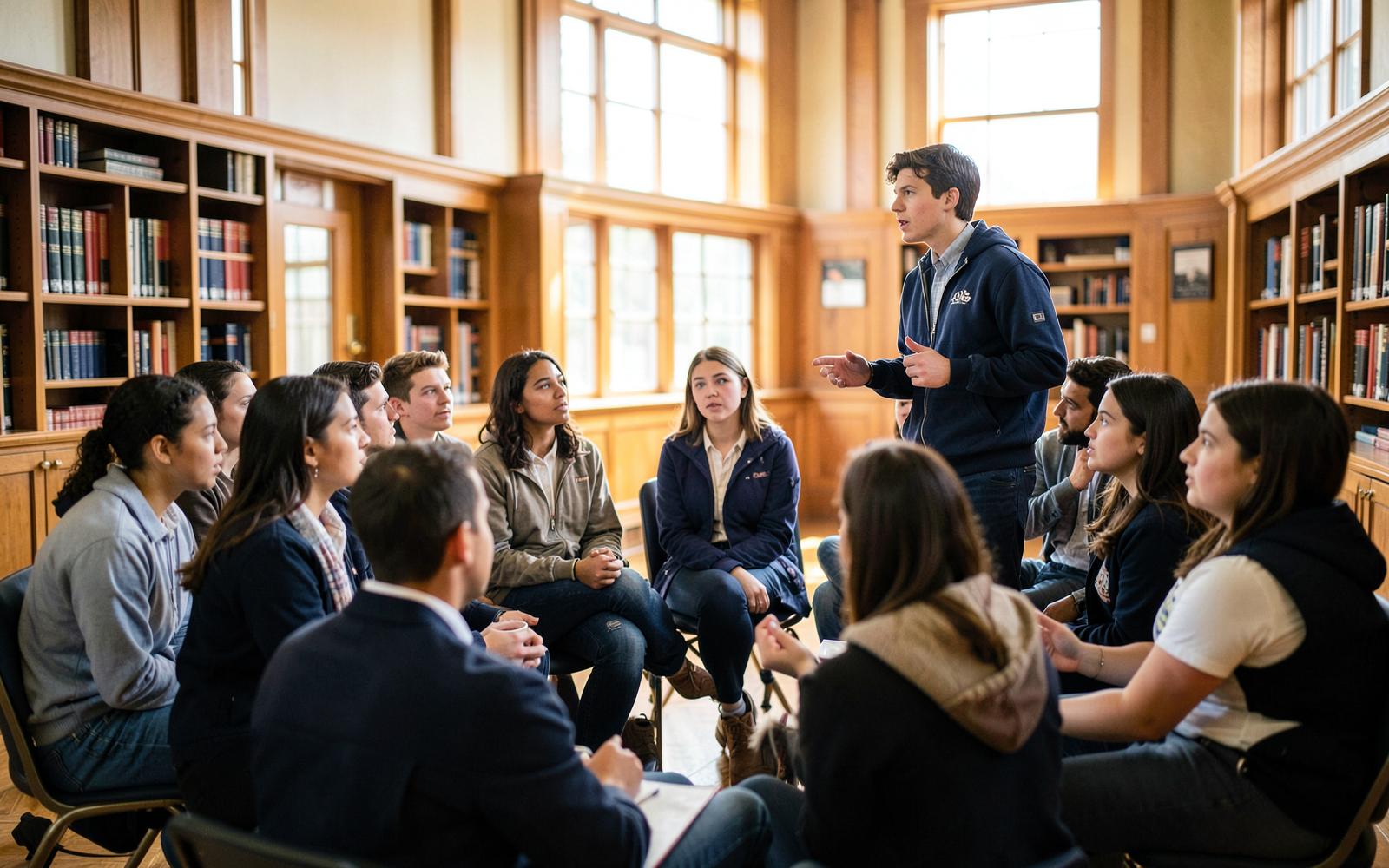
The presidency has been explicit that IES is not a debate society in a new coat. Debate produces winners. A chapter meeting, run well, produces something harder to measure: a room of students who leave holding their positions more carefully than they held them on arrival, having heard the strongest version of the case against them.
That principle governs the presidency's first-year priorities. Chapters are being asked to keep meetings small enough that no one can hide, to rotate facilitation so that leadership is practiced rather than held, and to close every term with written work that survives scrutiny outside the room.
“We are not asking students to agree with one another. We are asking them to understand one another well enough to disagree honestly.”
The second priority is intergenerational. The presidency is building a national roster of practitioners — officers, educators, clinicians, public servants — willing to sit with students and describe not the decisions they got right but the ones that cost them something. Those conversations, in the Society's experience, do more than any syllabus.
The third is durability. The founding presidency's stated measure of success is not the size of the network in its first year but whether the chapters it charters are still running, well, after its own members have graduated.
Bring IES to your school
Charters for the current academic year are open to student leaders in grades 9–12.
Start a chapter